Q4 Is Here. Spend It on the People Who Show Up Every Day.
Q4 budget season is here. The smartest investment you can make before year-end isn't software or a conference. It's the space where your people spend 40 hours a week, and the signal that space sends every single day.
Why year-end budget belongs in your space, and how even one chair update says everything about what you believe.
Q4 has a way of focusing the mind.
Budgets that have been sitting untouched since January suddenly have a deadline. Finance is asking what's left. Leaders are deciding where the remaining dollars should go before the fiscal year closes. Here is our case — and we'll make it quickly because you're busy: spend it on the people who show up every day. Not on a team retreat that lasts three days. Not on another software subscription. On the environment where your team spends forty hours a week, fifty weeks a year. On the space that is either telling them they matter — or quietly telling them they don't.
"The companies that use Q4 budget to invest in their people's environment don't just start the new year with a better office. They start it with a more engaged, more loyal, and more motivated team."
The Numbers Make the Case.
87% Less likely to leave — engaged employees are 87% less likely to quit their organization. The physical environment is a primary driver of engagement. Matter, 2025
33%+ Minimum cost of replacing one employee — at least 33% of annual salary in recruiting, onboarding, and lost productivity. Gallup, 2025
21% Only 21% of employees globally are engaged at work right now — an 11-year low. The space where they work is part of that story. Gallup, 2025
$8.8T Lost annually in global productivity due to disengagement. Your office environment is either contributing to that number or fighting it. Gallup, 2025
Why Q4 Is the Right Moment.
Year-end budget is one of the most underutilized opportunities in business. Most companies scramble to spend it on something — anything — before it disappears. The smart ones use it intentionally. A furniture refresh or space upgrade completed in Q4 does something powerful: your team walks back in after the holidays to a space that looks and feels different. Not the same office with a new calendar on the wall. A space that says — we thought about you while you were gone. We invested in where you work. We're serious about next year. That signal lands harder than almost any new year all-hands meeting or motivational email ever could.
What to Prioritize and Why Now.
Task Seating - Nothing communicates neglect faster than a chair that wobbles or no longer support the person sitting in it eight hours a day. Replace before year-end and your team notices day one.
Break-Room & Lounge - The space people choose to be in. Refreshed before Q4 closes means the holidays are spent in an environment that tells your team this company invests in them.
Conference & Collaboration -New year means new meetings, new pithces, new clients walking in the door. Q4 is the time to make sure that first impression n the new year is the right one. Set the intention.
Reception & Entry - The first thing every new hire, every client, and every partner sees. Year-end is the perfect time to make sure that impression is intentional.
Anything worn, broken, or overdue - If you’ve been saying ‘we’ll deal with that eventually” - eventually is now. Q4 budger is the vehicle. SALT Studio is the plan.
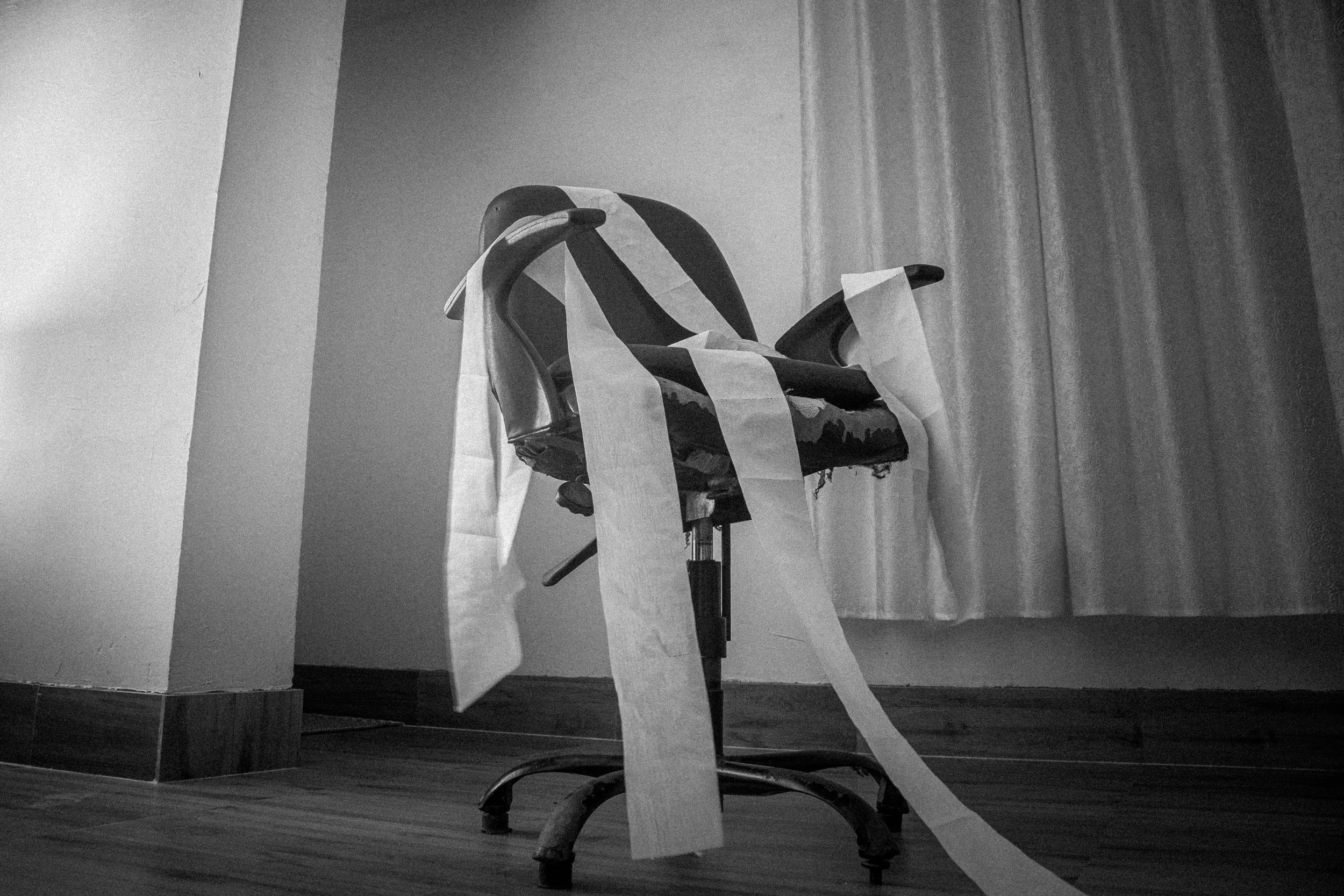
Even one new chair is a message.
Think about what it means when an employee sits down on the first day of the new year in a chair that actually fits them. That actually supports them. That someone chose for them. It doesn’t just feel better physically. It feels like proof that someone in this company pays attention to the details of what it’s like to work here. That signal — quiet, physical, undeniable — is one of the most powerful retention tools a company has. And it costs a fraction of what it costs to replace the person sitting in it.
Why Space Investment Is a Retention Strategy.
Retention is not won in the annual review. It is won — or lost — in the accumulation of daily signals that tell an employee whether this company sees them, values them, and intends to keep them. The workspace is one of the most visible of those signals. Every day your team walks in and reads the room, literally. The chair that holds them up or the one that's been broken for six months. The break-room that was designed for humans or the one that got whatever was left over. The office that feels like a company worth working for or one that ran out of things to care about.The research is unambiguous. Engaged employees, the ones who feel seen, valued, and invested in — are 87% less likely to leave. And the environment where they spend their working hours is one of the most direct, most tangible ways a company communicates that investment.
"You don’t have to do everything. You have to do something. One room. One upgrade. One signal that says — we thought about you. That is enough to start."
How SALT Studio Makes It Happen Before Year-End.
We know Q4 moves fast. Budgets have deadlines. Timelines are tight. Decisions that should have been made in July are being made in October. SALT Studio is built for exactly this. We come in, assess your space, identify the highest-impact moves within your budget, and execute, from design and specification through procurement, delivery, and full installation. We work with commercial-grade product that ships on time, backed by manufacturer warranties that protect your investment for years.
You tell us what you have to spend. We tell you what it can do. Then we make it happen before the calendar turns.

Your Space Should Grow With You
Your office isn't just where work happens. It's where your brand lives, your culture breathes, and your people decide whether to stay. Here's how SALT plans spaces that grow with you.
How intentional design connects your brand, your people, and your next chapter
Growing companies have a space problem that nobody talks about until it's too late.
They scale their team. They evolve their brand. They sharpen their culture. And then one day someone walks into the office and realizes the space still looks like the company they were three years ago, not the one they're becoming. It's a quiet misalignment. But it costs more than most leaders realize.
Space is a statement. Make it intentionally.
Every office communicates something before a single word is spoken. The moment a candidate walks in for an interview, the moment a client steps into your conference room, the moment a new hire arrives on their first day, your space has already made an impression. The question isn't whether your space is saying something. It's whether what it's saying is true. Does it reflect who you actually are? Does it communicate the values you've built the company on? Does it feel like a place your best people want to show up to?
Only 38% of employees globally say their workplace provides a great experience. The other 62% are working in spaces that feel misaligned, uninspiring, or simply designed for someone else's version of work.
That gap, between the experience employees want and the environment they actually work in, is where retention problems begin. Where culture starts to feel performative rather than real. Where great people start quietly looking elsewhere.
Growth changes everything — including what your space needs to do.
When a company grows, the space that worked at 15 people rarely works at 50. The open floor plan that felt energetic starts to feel chaotic. The single conference room that handled everything is suddenly never available. The breakroom that felt like a perk starts to feel like an afterthought. But the bigger issue isn't square footage. It's alignment. Growth changes how teams collaborate, how leaders communicate, how culture gets built and reinforced. The space either supports that evolution, or it works against it. The companies that get this right don't wait until the pain is obvious. They plan their space the way they plan their hiring: intentionally, with an eye on where they're going, not just where they are today.
The most successful workplaces in 2026 won't be defined by square footage. They'll be defined by strategy, how well the space supports the people inside it and the culture they're building together.
How SALT approaches space as a growth partner.
SALT doesn't start with furniture. We start with questions. Who are you as a company right now, and who are you becoming? What does your culture feel like on the best days, and what does your space do to reinforce it? Where are your people most productive, most connected, most likely to do their best work? Where are the friction points that the space creates without you even realizing it? From those conversations, we build a design plan that serves three things simultaneously:
Your Brand
Your space should look and feel like you, not like a generic office someone ordered from a catalog. The colors, materials, furniture, and layout should tell your story. When your people bring a client in, the space should do half the selling before anyone opens their mouth.
Your People
Great design supports the full spectrum of how people work, focused deep work, spontaneous collaboration, formal meetings, informal connection. Research shows that replacing an employee costs between 40% and 200% of their annual salary. A space that makes people feel valued, supported, and seen is one of the most cost-effective retention investments a company can make.
Your Growth
We design with your trajectory in mind, not just your current headcount. Modular systems that flex as teams grow. Zones that can be repurposed as your needs evolve. Furniture that moves with you rather than locking you into a layout that becomes obsolete in 18 months.
The conversation most companies never have — until it's too late.
Most furniture decisions are made reactively. A lease is signed, a move-in date is set, and suddenly someone is ordering desks and chairs under deadline. The result is a space that functions, but doesn't inspire. That works, but doesn't communicate. That fills the square footage, but doesn't reflect the company inside it. The companies that get space right start the conversation earlier. Before the lease. Before the headcount projections. Before the budget is locked. They bring a design partner in at the planning stage, not the procurement stage. That shift changes everything. It means the space is designed around the strategy, not the other way around. It means the furniture supports the culture rather than contradicting it. And it means when people show up on day one, the space already tells them something true about where they've landed.
Engaged employees reinforce culture, and culture in turn strengthens engagement, boosting productivity, loyalty, and retention. The physical environment is one of the most visible, tangible expressions of that culture. It signals every single day: this is who we are and how we value you.
What the SALT partnership looks like in practice.
When you work with SALT, you get more than furniture. You get a team that thinks about your space the way you think about your business, holistically, strategically, and with a long view. We start with a discovery conversation, understanding your brand, your culture, your growth plans, and the specific ways your team works and connects. From there, our designers develop a space plan that brings that vision to life. We specify every product, manage procurement and lead times, coordinate delivery, and handle installation. And we follow up, because the best spaces aren't set-and-forget. They evolve as you do. From a single conference room refresh to a full-floor buildout. From 10 workstations to 200. From Salt Lake City to anywhere in the country. One team. One process. No handoffs.
The space you work in should feel like it was made for you — because it was.